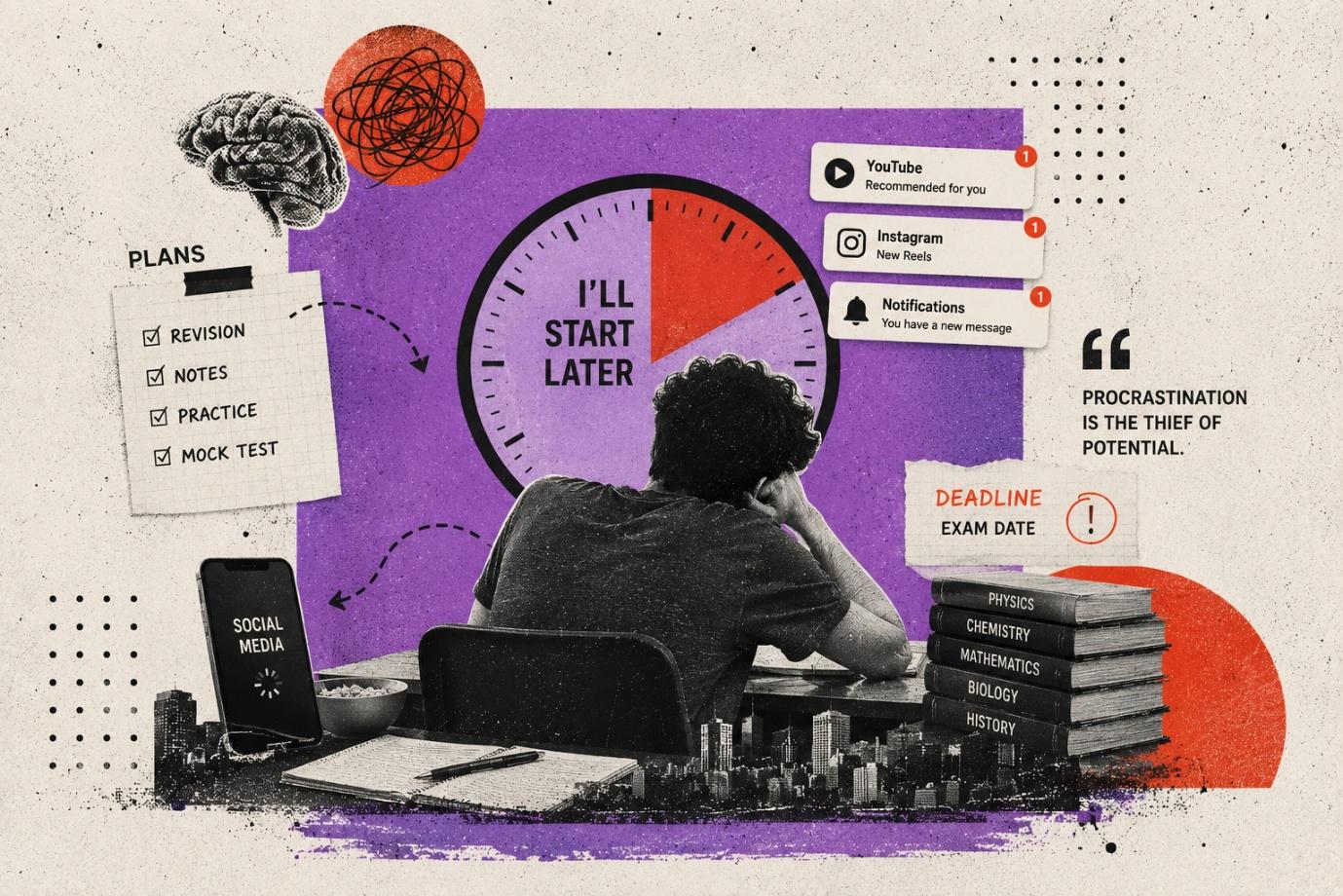
We’ve all been there: you sit down with a fresh coffee, open your laptop, and suddenly the history of 18th-century hat-making feels like the most urgent thing you need to research. Procrastination isn’t a lack of willpower; it’s often a battle against feeling overwhelmed. When a task feels too large, too boring, or too high-stakes, our brains look for any possible “escape hatch” to avoid the discomfort.
If you’re tired of the “I’ll do it in ten minutes” loop, you don’t need more discipline—you need a better system. Here is a comprehensive guide on how to reclaim your focus, design a high-performance environment, and actually get the work done.
1. The “Two-Minute Rule” for Momentum
The hardest part of any study session is the transition from doing nothing to doing something. When a task feels monumental, the psychological resistance is at its peak. This is where the Two-Minute Rule comes in: tell yourself you will only work for two minutes.
Why it works: It lowers the “activation energy” required to start. Once you’ve opened the document, titled the page, and written the first two sentences, the “startup friction” disappears. Most people find that once they’ve started, the momentum carries them through the next hour. The goal isn’t to finish the work in two minutes; it’s simply to stop the act of not doing it.
2. Design a “Flow-State” Environment
Your brain is highly sensitive to environmental cues. If you try to study in the same spot where you eat, sleep, or play video games, your brain receives conflicting signals. To stop procrastinating, you need to curate a space that explicitly signals “work mode.”
- Visual Minimalism: Clutter is a silent productivity killer. A desk piled with old mail and empty cups creates “visual noise” that pulls at your attention. Keep your workspace premium and clean—only the essentials should be within your line of sight.
- The “Out of Sight” Phone Rule: Scrolling is the ultimate procrastination trap. Don’t just flip your phone over; put it in another room or inside a drawer. If you have to physically get up to check a notification, you’re far more likely to stay focused on your notes.
3. The Pomodoro Technique (and Why You Should Tweak It)
The standard Pomodoro Technique—25 minutes of work followed by a 5-minute break—is a classic for a reason. It creates a “sprint” mentality. However, 25 minutes can sometimes feel too long if you are struggling with a particularly dry subject.
Don’t be afraid to experiment with your ratios. Try a 15/3 split (15 minutes of deep work, 3 minutes of rest) to build up your “focus muscles.”
A Warning on Breaks: During your break, move your body. Stretch, grab water, or look out a window. Avoid the “digital rabbit hole” of social media. A 5-minute Instagram break easily turns into a 30-minute detour that breaks your cognitive flow.
4. Active Recall: Turning Study into a Game
One of the biggest drivers of procrastination is boredom. Staring at a highlighter-streaked textbook is a passive activity that makes the mind wander. To stay engaged, switch to Active Recall.
Instead of re-reading your notes, close the book and ask yourself: “If I had to explain the three most important points of this chapter to a friend right now, what would they be?” By forcing your brain to retrieve information rather than just “look” at it, you turn studying into a problem-solving exercise. It’s more mentally taxing, but it’s also much more engaging, which keeps the urge to procrastinate at bay.
5. “Eat the Frog” First
The “Eat the Frog” method, popularized by Brian Tracy, suggests that you should tackle your most difficult or most dreaded task first thing in the morning.
We often procrastinate on small tasks because the “big” task is looming over us like a dark cloud. By finishing the hardest task first, you get a massive dopamine hit and a sense of relief. Everything else you do for the rest of the day will feel easy by comparison. If you leave the hard stuff for the evening when your “willpower battery” is drained, you are almost guaranteed to push it to the next day.
6. Forgive Your Past Self
Perhaps the most overlooked step in stopping procrastination is self-compassion. Research shows that students who forgive themselves for procrastinating on a previous exam actually procrastinate less on the next one.
When you beat yourself up for “wasting the morning,” you create a negative emotional state. To escape that negative feeling, your brain looks for a distraction—leading to more procrastination. Acknowledge that you had a slow start, forgive yourself, and focus entirely on what you can do in the next twenty minutes.
The Bottom Line
Stopping procrastination isn’t about being a perfect, tireless machine; it’s about being consistent and managing your environment. By focusing on a clean workspace, using short bursts of timed work, and engaging with your material through active recall, you turn “studying” from an intimidating mountain into a series of achievable, daily wins.