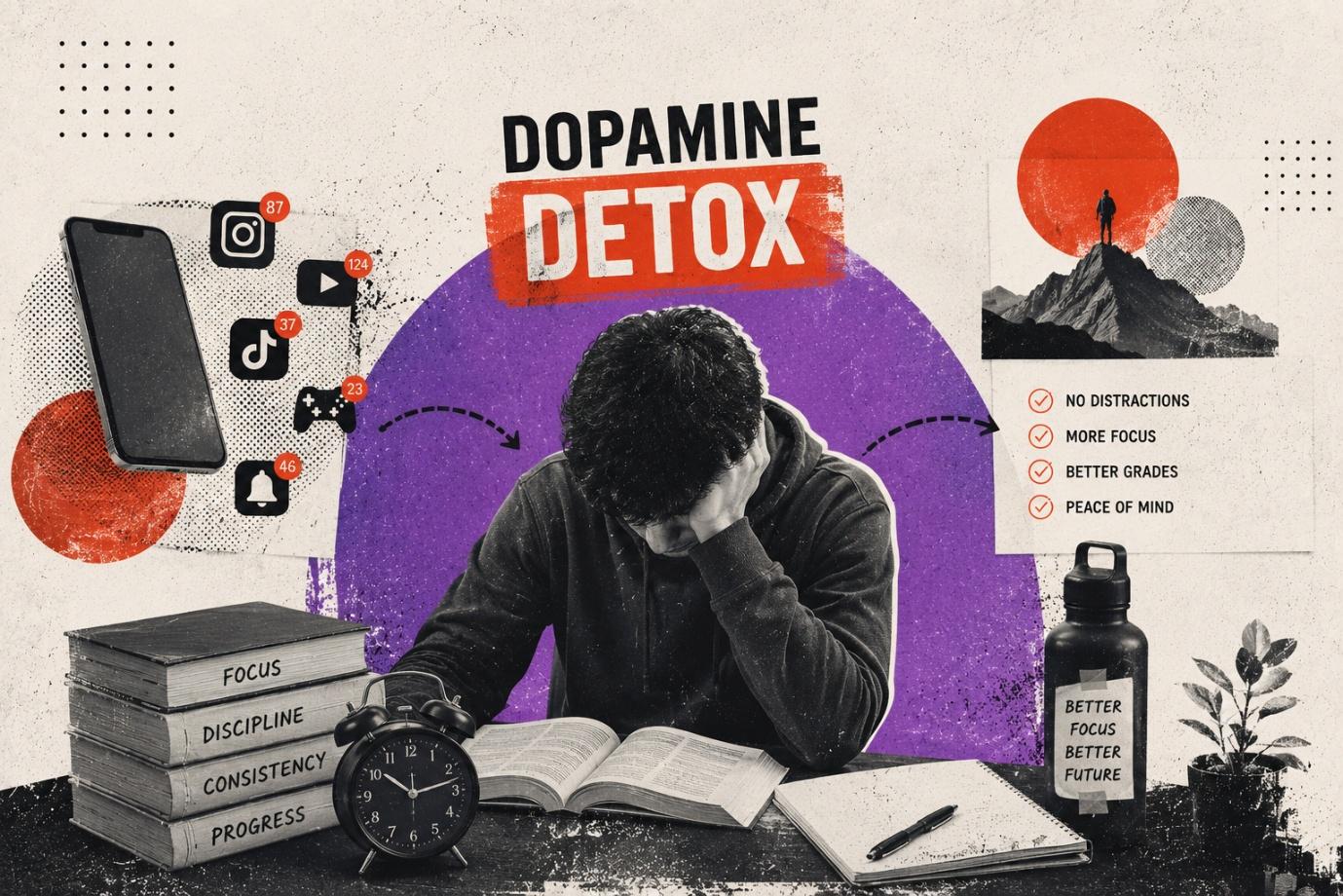
Imagine a student waking up with a singular, iron-clad mission: Today is the day.
No Instagram. No YouTube. No Netflix. No gaming. No scrolling. No distractions. Just pure, unadulterated focus. But by 11:00 AM, the irony sets in—they are sitting at their desk, captivated by a productivity reel about how to stop watching productivity reels.
Welcome to the strange, paradoxical rise of the Dopamine Detox. What started as a niche biohacking concept has exploded into a viral movement, dominating StudyTube and academic circles alike.
From clinical concept to viral “Monk Mode”
The term hit the mainstream around 2019, largely credited to psychiatrist Dr. Cameron Sepah. His original idea was grounded: modern life is a minefield of “super-stimuli”—social media, gaming, and junk food—that offer instant rewards.
Compared to the flash and pop of a TikTok feed, a 500-page biology textbook doesn’t stand a chance. The “detox” was meant to be a temporary break to let the brain’s reward system recalibrate.
Then, the internet did what the internet does: it turned it into an extreme sport.
Soon, creators weren’t just suggesting a break from social media; they were promoting “Monk Mode.” No music. No caffeine. No talking. No fun. Just work. For students struggling with dwindling attention spans, this felt like the ultimate “silver bullet” for discipline.
Why students were the perfect audience
Students are currently the primary battlefield for the Attention Economy. They are trying to study while fighting billion-dollar algorithms designed by the world’s smartest engineers to keep them scrolling.
- The “One Message” Trap: You unlock your phone to check a group chat; forty minutes later, you’re watching a video on how to restore vintage rugs. Your momentum is dead.
- The Fantasy of Transformation: Productivity creators packaged the detox as a cinematic life-change. Titles like “How I Reset My Brain Overnight” sell a seductive fantasy: that one dramatic challenge can fix years of procrastination.
The science vs. the hype
This is where the trend gets messy. Dopamine isn’t a toxin; it’s a necessity. It regulates motivation, learning, and movement. You cannot “remove” it, nor would you want to.
The real issue isn’t the chemical; it’s overstimulation. When the brain becomes accustomed to constant novelty, “slow” tasks like revision feel physically painful. The internet oversimplified the science, but the core observation—that we are over-stimulated—is undeniably true.
The great irony of the trend
The biggest irony? Thousands of students spend hours consuming “Dopamine Detox” content while procrastinating on their actual work. Watching someone else be productive triggers a “productive procrastination” high—it feels like progress, but your textbook remains closed.
Beyond the trend: what actually works?
The students who actually win don’t usually rely on extreme 24-hour fasts. Instead, they build systems over willpower:
- Reducing Friction: Putting the phone in a timed locker or a different room.
- Digital Boundaries: Using app blockers that aren’t easily bypassed.
- The “Boring” Basics: Prioritizing sleep and consistent study blocks over dramatic “resets.”
In practice, this looks a lot like the Pomodoro Technique for protected focus sprints, the environment-design tips in how to stop procrastinating while studying, and a steady revision timetable instead of heroic all-nighters.
The Dopamine Detox trend became popular because focus has never been harder to maintain. It isn’t a sign that students are lazy; it’s a sign that they are trying to fight back against a world designed to keep them distracted.
The lesson? You don’t need a dramatic “detox” to succeed. You just need a system that protects your attention from the noise.