How to remember current affairs: the science of sticking power
For students, current affairs can feel like an endless tide of names, dates, and policy shifts. Many find it difficult to retain this information because news cycles move rapidly, often pushing yesterday’s facts out of memory before they can be solidified.
The most effective way to combat this forgetting is through spaced repetition, a science-backed method that optimizes when you review information so it sticks. If you are new to the idea, our guide on what spaced repetition is walks through the basics; the forgetting curve explains why passive reading is rarely enough.
1. Why we forget current affairs
The primary hurdle for students is the forgetting curve: humans can forget a large share of new information within a day if it is not reinforced. Two patterns make current affairs especially fragile:
- Passive reading: Reading a newspaper or scrolling a news app is often passive, which rarely builds long-term retention.
- Information overload: Daily events across polity, economy, and international relations add up fast, so cramming at the end of the month rarely works.
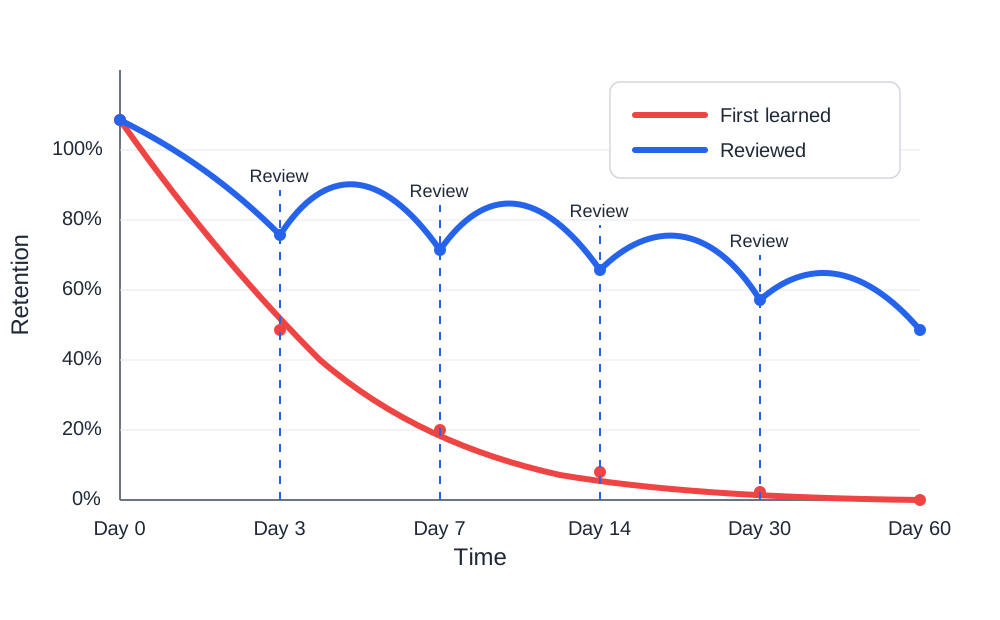
Timed review beats hope: revisiting material just before you would forget it is what moves facts from “I read this once” to “I can recall it on exam day.”
2. The solution: spaced repetition
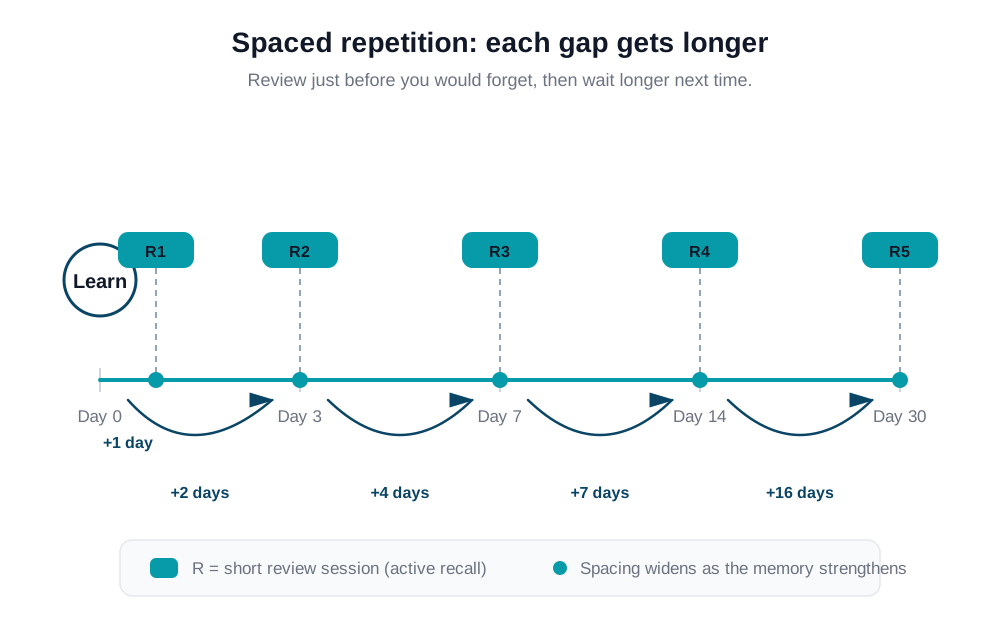
Spaced repetition means reviewing specific information at gradually increasing intervals (for example: one day, three days, one week, one month). It helps current affairs in three ways:
- Strategic interruptions: Reviewing a fact as it is about to fade strengthens the memory trace.
- Active recall: Retrieving an answer is more effective than rereading the same paragraph.
- Efficiency: You spend more time on what is fragile and less on what you already know well.
3. Practical tips for current affairs retention
To make spaced repetition work with your daily news digest, try these habits:
- Categorize your notes: Group items into themes such as polity, economics, or science and technology so reviews stay organized.
- Use active prompts: Instead of “The G20 summit was in India,” write “Where was the 2023 G20 summit held?” so your next session is recall, not rereading.
- Connect the dots: Tie events to static subjects—for example, link a new policy to polity or social justice concepts you already study.
For exam-specific revision rhythm, see spaced repetition for UPSC—the same scheduling logic applies to current affairs stacks, not only textbooks.
4. Use automated planner apps
Manually tracking ideal review dates for hundreds of moving news items is exhausting. Apps that schedule reviews remove the guesswork and tell you what to revisit each day.
Anki
Often considered the gold standard for power users, Anki offers customizable scheduling—but building and maintaining cards for every news item can be slow.
RemNote
RemNote blends notes with spaced repetition and linking between concepts. It suits students who want a knowledge graph, though reviews still lean on a card-style workflow.
Revu
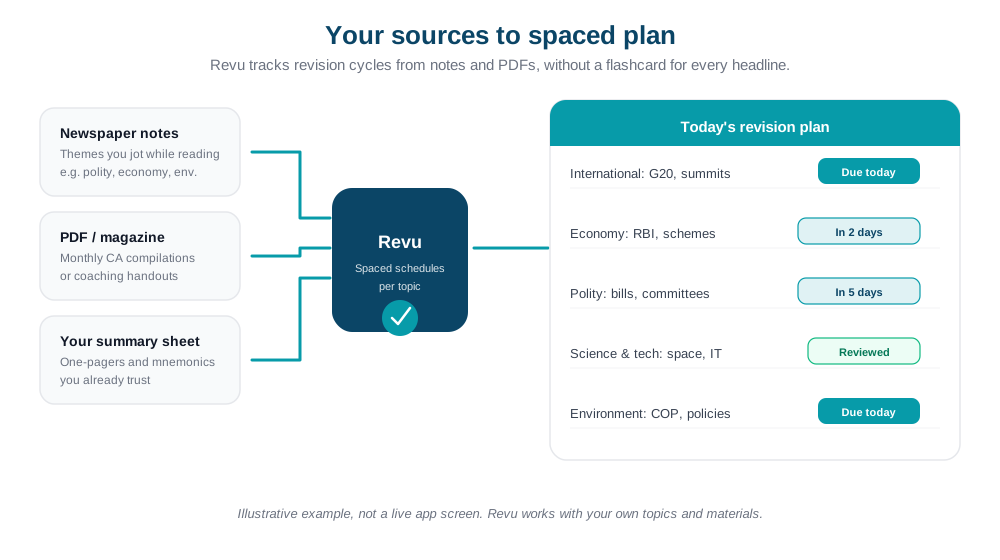
Unlike tools that force flashcard creation first, Revu lets you read and review from your own sources—handwritten notes, textbooks, or PDFs—by tracking each topic’s revision cycle. Your daily plan stays automated so you can focus on content, not spreadsheet math.
Key takeaway
Current affairs stick when you combine active prompts, themed notes, and spaced repetition—ideally with a planner that handles the schedule for you.
For a wider tool comparison, read the best spaced repetition apps side by side.